A Payment Without Permission
“If it’s free, you are the product.”
We say it about every social network. Then we keep scrolling.
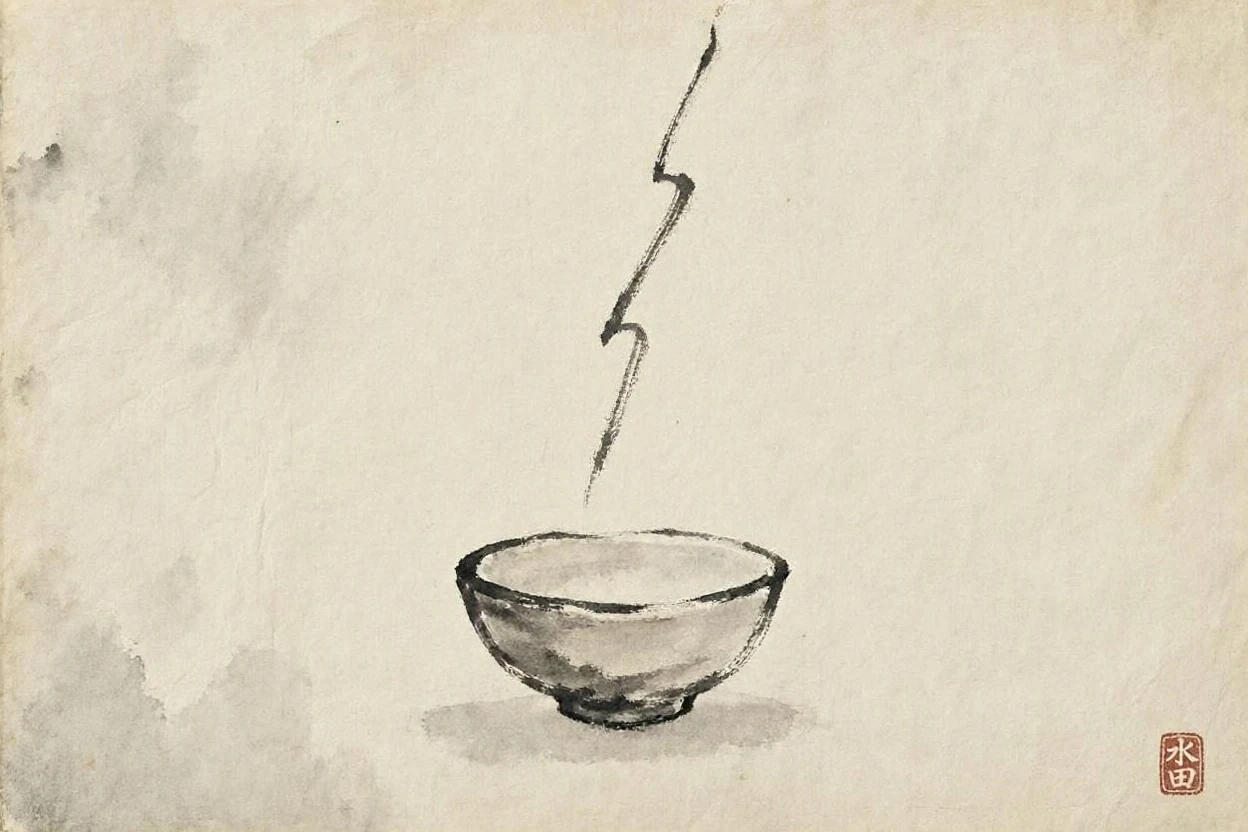
A few weeks ago I added a small button to the end of every essay on this site. A lightning bolt. Press it, and a few sats travel from your wallet to a node I run. No account. No platform. Nobody in the middle.
Nobody has pressed it yet.
I like that more than I expected.
In my last essay I left a question open: what does it actually take for a payment to need nobody’s permission? An empty button turned out to be a good place to look for the answer.
The Reader Was Never the Customer
Mises called it consumer sovereignty. In a free market, the people who spend decide what gets made. Every purchase is a small instruction to producers: more of this, less of that.
Advertising quietly breaks that loop.
The writer is paid by the advertiser. The advertiser pays for attention. The platform sells the attention. And the reader, the one person the writing is supposedly for, pays nothing and decides nothing.
So the writing bends toward whoever is paying. Toward the headline that gets the click. Toward the outrage that keeps you on the page. Toward whatever the algorithm rewards this month.
When the reader stops paying, the reader stops counting.
Advertising Is the Fiat of Content
I don’t think the comparison is a stretch.
Fiat money is paid for by someone who isn’t in the room. You never see the cost of a new unit of currency. It arrives later, spread thin, as prices that drift upward and savings that quietly shrink.
Advertising works the same way.
You never see the price of an article. You pay it in attention, in data, in a hundred small nudges. And like a currency that keeps being printed, attention gets debased: more ads per page, more tracking per click, less meaning per minute.
Cantillon noticed that new money benefits whoever stands closest to the printer. Ad money follows the same path. It flows first to the platforms, then to the creators who suit the platforms, and last of all, if at all, to the writer who simply had something to say.
Inflation is a tax you never see. Advertising is a price you never agreed to.
Twenty-One Sats and No Questions
A zap is almost too simple to explain.
A reader likes something. They press a button. A Lightning payment goes straight to the writer, often in seconds, often for less than the price of a coffee.
Not a platform taking a cut. Not a payment processor checking which country you live in. Not a bank deciding my essays are too political to keep my account open.
Just a reader and a writer.
That is my answer to the question from two weeks ago. A payment needs nobody’s permission when three things are true at once:
The sender holds their own keys. The receiver can be paid without signing a merchant agreement. The network moves the payment without asking why.
The first is custody. The second is the liquidity I wrote about last time, the pipe I rent so that someone can reach me. The third is Bitcoin itself.
A zap is the smallest proof that all three can hold at the same time.
The Silence Is Information Too
I won’t pretend the button is a business model.
Advertising pays for every view, even the ones nobody reads. A zap pays only when someone decides the essay was worth something. That is a much higher bar, and most writing doesn’t clear it on any given day.
There are practical walls too. Most readers don’t have a Lightning wallet. Almost all of us were raised on free. And value-for-value is a culture long before it is an income. Nobody is paying rent with zaps from a few hundred readers.
But the silence is not a failure. It is a price signal, and an honest one.
An ad slot would tell me how many people scrolled past. An empty button tells me how many people thought it was worth paying for.
An empty tip jar is more honest than a full ad slot.
Meanwhile, others are building money that runs the other way: money that asks permission for every payment and remembers every one of them. That deserves its own essay.
You Are Not the Product
“If it’s free, you are the product.”
Here, it is free. And you are not the product.
Nobody is selling your attention on this page. No ads, no sponsors, no feed deciding what you see next. You are simply the reader, which, it turns out, was always the point.
If one day you think an essay was worth something, the button is at the bottom. If you don’t, that is an answer too, and I will take it as one.
Either way, nobody has to approve it.
Free to read. Free to pay. Nobody’s permission required.
If this essay was worth something to you, zap it.