Bitcoin: The First Institution That Doesn’t Need to Be Trusted
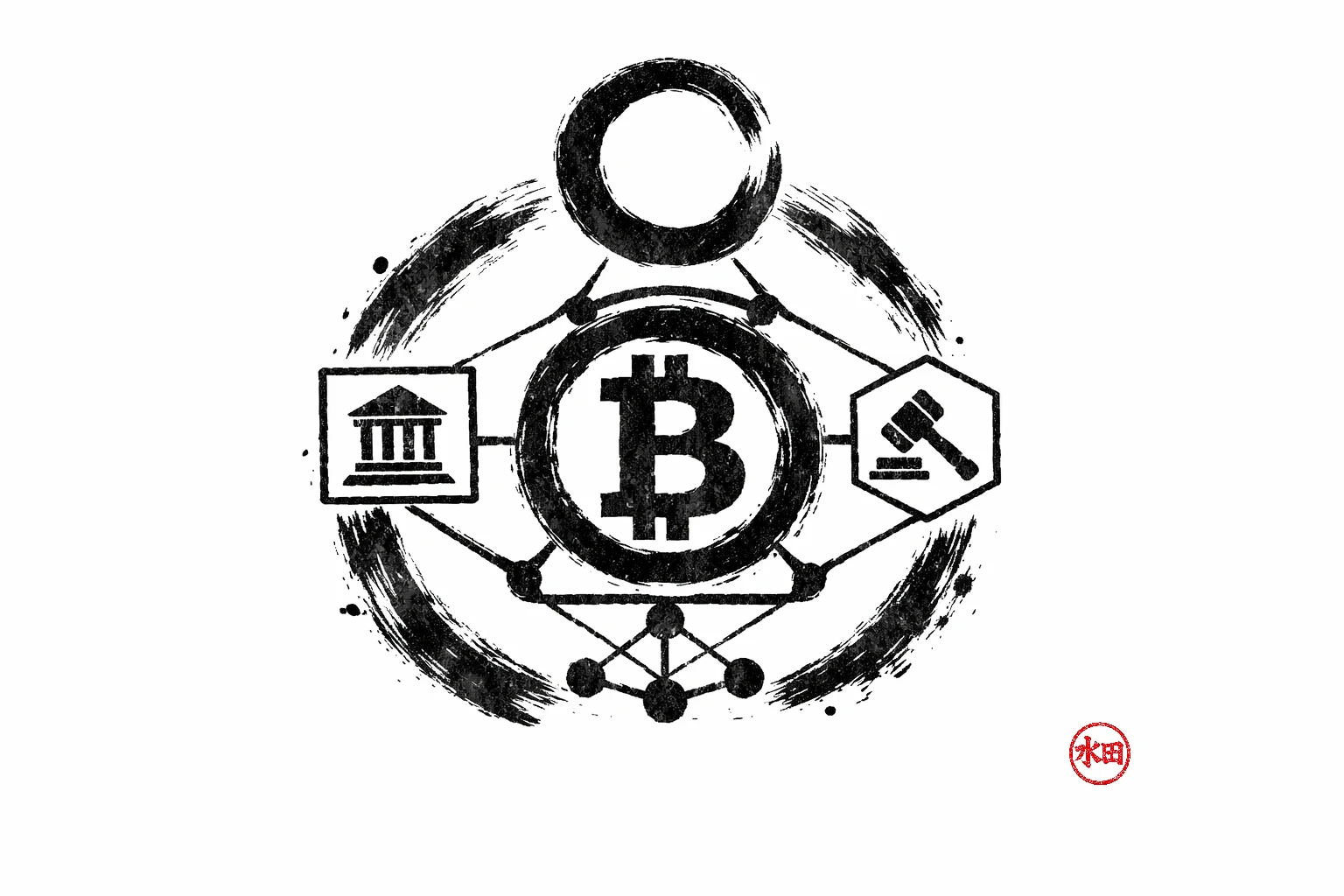
Every institution in human history has shared the same flaw:
it required trust.
Trust in rulers.
Trust in committees.
Trust in experts.
Trust that the people in charge would remain honest, competent, and restrained.
Across centuries, that trust has been rewarded with debasement, corruption, capture, and collapse. Empires fell not because citizens changed, but because the institutions they depended on decayed from within.
Bitcoin is the first break in that pattern — the first institution that works precisely because it does not ask for trust at all.
A Brief History of Failed Institutions
Human civilization is a graveyard of trusted systems that eventually betrayed the people who relied on them.
- Ancient rulers clipped coins to fund wars.
- Medieval kings seized gold from their own citizens.
- Central banks inflated away savings to solve political problems.
- Committees of experts promised stability, then delivered crises.
- Regulators meant to protect the public ended up protecting incumbents.
The pattern is always the same:
power concentrates → incentives warp → trust breaks.
The problem was never the individuals.
It was the architecture.
Any institution built on trust eventually becomes a target for those who can exploit it.
Trust-Minimization as a Civilizational Upgrade
Bitcoin introduces a simple but revolutionary idea:
Don’t trust. Verify.
This is not a slogan.
It is a new model for how humans can coordinate at scale.
Instead of trusting:
- a central bank to issue money responsibly
- a government to protect property rights
- a committee to maintain rules
- a corporation to stay honest
Bitcoin replaces all of it with open rules, enforced by math, executed by a global network with no center.
No backroom deals.
No privileged actors.
No exceptions.
The system works because no one can change it — not even the people who want to.
This is trust-minimization:
a system where you don’t need to believe in anyone’s virtue for the rules to hold.
Bitcoin Replaces Authority With Verification
Traditional institutions rely on authority:
- “Trust us, we’re the experts.”
- “Trust us, we’ll manage the money supply.”
- “Trust us, we’ll keep inflation under control.”
- “Trust us, we’ll protect your savings.”
Bitcoin flips the model:
- The supply is fixed — and you can verify it yourself.
- The rules are public — and no one can rewrite them.
- The ledger is transparent — and anyone can audit it.
- The network is decentralized — and no one can shut it down.
Bitcoin doesn’t ask for trust because it doesn’t need it.
It replaces human discretion with protocol-enforced guarantees.
This is not just technological.
It is philosophical.
For the first time, we have an institution that is:
- incorruptible
- leaderless
- permissionless
- predictable
- neutral
- global
A system that cannot be bribed, threatened, or persuaded.
Sovereignty Is Now a Protocol, Not a Promise
For centuries, sovereignty was something granted by institutions:
- A bank “allowed” you to access your money.
- A government “allowed” you to transact.
- A regulator “allowed” you to participate in markets.
Bitcoin ends that era.
Sovereignty is no longer a privilege.
It is a property of the protocol.
If you hold your keys, you hold your wealth.
If you run a node, you enforce your rules.
If you broadcast a transaction, the network accepts it without asking who you are.
No permission.
No gatekeepers.
No trust required.
Bitcoin turns sovereignty from a political promise into a mathematical fact.
Once you experience that kind of independence, the old world — built on trust, authority, and fragile institutions — feels like a relic of a more primitive age.